

Whoa! Seed phrases feel archaic. They worked when wallets were raw and early users were nerdy and patient. But that era is fading fast, and my gut says most people won’t tolerate long strings of words much longer. Something felt off about making ordinary users play cryptographic memory games. Really?
Here’s the thing. A 24-word seed is secure on paper, but it’s also brittle in real life—lost, burned, stolen, miscopied. People misplace paper, laminate it poorly, or store it in a desk that gets cleaned out. I’m biased, but that model screams “user error” to me. Initially I thought seeds were the best universal key; then I watched friends lose access. Actually, wait—let me rephrase that: seeds are cryptographically elegant but operationally messy.
Short-term memory and secure backups don’t mix. Hmm… So we need a better UX that preserves strong crypto guarantees while matching how normal humans behave. Contactless smart cards—tiny chips you can tap with your phone—are emerging as that middle ground. They give you tangible ownership without forcing you to memorize or micromanage a paper list. On one hand they centralize a physical object, though actually that physicality is a feature not a bug when done right.
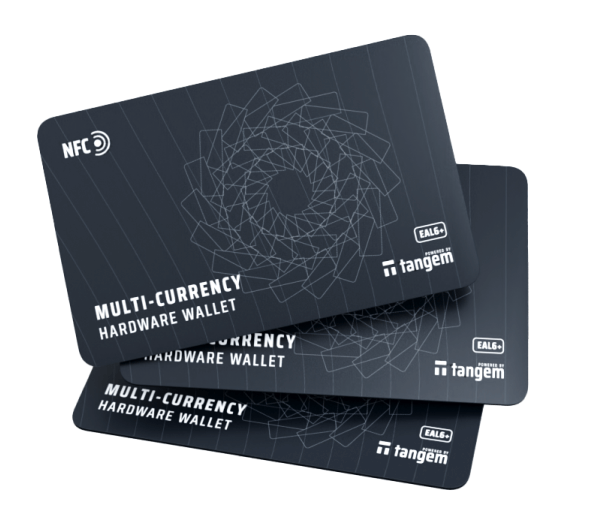
Smart cards like these act as a seed phrase alternative by holding the private key inside secure hardware where it never leaves. Medium sentences explain the nuance: the key generation happens inside the chip; signing is done on-device; your phone only receives signatures, not secrets. Long sentence with more depth and context: that architecture minimizes attack surface because a compromised phone can’t extract the private key, and offline transfer channels are unnecessary, which matters especially when you travel, use public Wi‑Fi, or juggle multiple accounts across apps.
A practical look — how smart cards change the game
Okay, so check this out—contactless cards combine NFC convenience with tamper-resistant chips. They feel like a credit card. They don’t require wires. They slip in a wallet. People get that instantly. I’m not 100% sure everyone will adopt them overnight, but early adopters already love the simplicity. On one hand, adoption depends on trust in the manufacturer; though actually, many vendors publish specs and audits so you can evaluate firmware transparency.
Technically, a smart-card-based hardware wallet stores the private key in a secure element. It performs cryptographic operations internally and exposes only allowed commands over NFC. That means key material never touches the phone. For most users that’s huge. My instinct said this would be clunky at first. Instead, my first impressions were pleasantly surprised: it’s smooth, fast, and feels modern.
Check this example—tangem wallet made that UX familiar and near-frictionless. I used it during a trip to NYC and the quick tap got signatures without fuss. The link below is where I first read the spec and bought a card. The integration was straightforward with mainstream wallets and some DeFi apps. I’m not endorsing blindly; do your research—yet that experience stuck with me.
Security tradeoffs — what you gain and what you risk
Short: you trade some redundancy for convenience. Medium: you still need a backup plan for card loss or damage. Long: ideally, you pair the smart card with a social or multi-device recovery method, or create a secondary card stored in a different secure place, because single-point physical loss is a genuine failure mode if you skip redundancy.
Here’s what bugs me about naive setups: people assume a card is indestructible. It’s not. It resists tampering, yes, but it can be lost or demagnetized. So the recommended pattern is to treat the card like a high-value credit card—store a spare in a safe-deposit box or a personal safe. That extra step feels familiar to many Americans used to safeguarding physical valuables. Oh, and by the way…spare cards cost more upfront, but they pay off if you ever misplace the primary.
For enterprises, smart cards can be integrated into multi-signature workflows where several cards are required to approve a transaction. That reduces single-point risk and still avoids exposing seed phrases on insecure machines. From an infosec perspective this is cleaner for teams and custodians who want operational discipline without messy procedures.
On the other hand, hardware vendor risk matters. You have to trust the supply chain and firmware. Some vendors provide open audits, reproducible builds, and third-party penetration tests. Others are opaque. Be picky. My instinct said “trust but verify.” Seriously, take time to read the audit summaries before committing large sums.
Contactless payments and everyday use
Tap-to-pay is no longer sci-fi. Medium sentence: a smart card can be configured for contactless payments when integrated with payment rails or custodial services. Long sentence: that opens the door to using crypto for regular purchases without exposing keys, because the signing happens on the card and the merchant only sees the signed transaction payload or payment token, not your private key.
In practice that means fewer app prompts and faster checkout. I used a contactless card to pay at a coffee shop once and the barista barely noticed—very smooth. There’s complexity under the hood, however; regulatory and KYC layers still apply for fiat on‑ramps and card-linked services, so this isn’t a universal cashless panacea yet.
Common questions
What happens if the card is lost?
Short answer: you need a backup. Medium detail: most vendors recommend a secondary card or a recovery method that allows you to restore keys to a new card. Longer thought: some solutions enable distributed backups across multiple devices or social recovery so that you don’t depend on a single physical object, but each method carries tradeoffs in UX and trust assumptions.
Are smart card wallets safe against malware?
Short: yes for key extraction. Medium: malware can’t read keys from a secure element. Long: however, malware can trick you into approving transactions you don’t want, so always verify transaction details on-screen and confirm the recipient address externally when dealing with large sums.
Initially I feared that moving off seed phrases would reduce decentralization. Then I realized that shifting risk from human memory to a physical device can broaden real-world decentralization by getting more regular people into self-custody. There’s a catch: vendor and supply-chain trust must be managed thoughtfully. I’m not fully comfortable handing sole custody to any single provider—so I use layers: a primary smart card for everyday use, a cold‑air‑gapped option for the biggest vaults, and a documented recovery plan.
Final thought: the era of scribbling seeds on paper is ending. Wow! We can have both safety and sane UX now. If you want to try a contactless hardware approach, check the tangem wallet link and read the specs carefully before committing funds. I’m convinced this is one of the cleaner on-ramps to usable personal custody—still imperfect, but way better than asking friends to memorize 24 words that mean nothing to their lives.